



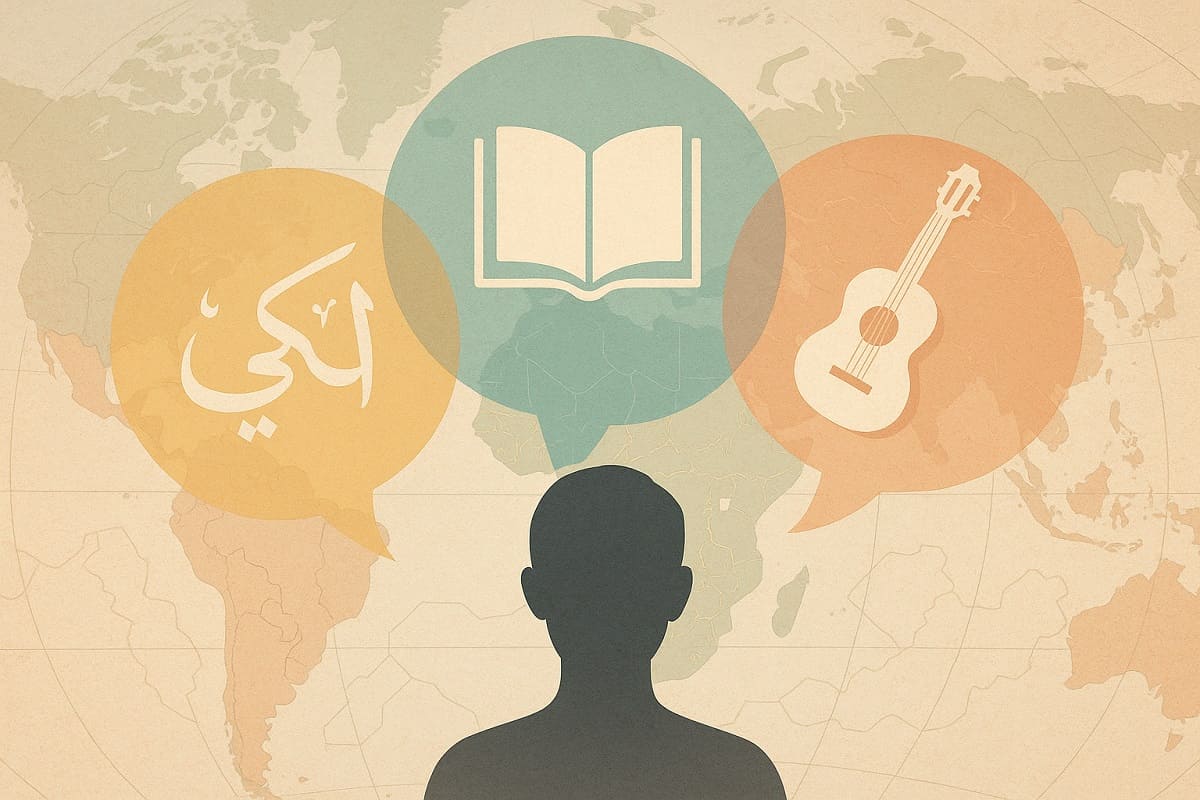
Relocating to a new country fundamentally changes how you think, subprocess, and address talk, and now utilizing a specific lingo identifies the address. I distinguish my case in the order of Arabic, English and Spanish, so it Started off a bit technical; however, traveling to Colombia introduced a new layer to my identity with the Spanish language. With each new language I encountered came unique challenges alongside learning them.
From Arabic to English: The First Stretch
Understanding how to say peculiar things in Arabic and using a vast vocabulary and language to creatively express deep meaning is a challenge I faced with my Arabic and English lingo. So, when I use English and Arabic disposition, the thoughts I express are a deepfelt part of my English vocabulary, which has now become too direct.
Over time, I started to pay very much attention to statement phrasing; however, the first sounded a bit generic and too straightforward to me and also needed carefully placed tone and articulation. The English layer is integrated into my identity, and as I speak English, I am very peculiar in my way of thinking and cautious. People say humor-filled things as well, holding strong to share opinions, so the thoughts didn’t have a colon. Language perfection is a key asset; however, I let loose while walking to people talking, and the rhythm, pauses, and intricacies became learning tools, honing my English alongside Arabic.
Then Came Spanish: A Different Kind of Challenge
When I first came to Colombia, I thought I had a grasp on Spanish. It looked friendlier, more familiar. I couldn’t have been more off. Emotional, fast, and full of peculiar expressions, Spanish in Colombia is a whole new world. I “knew” English words that were Spanish false friends, and I got them terribly wrong, like saying I was ‘embarazada’ instead of saying I was embarrassed. However, vocabulary was not the main barrier for me. I found the exuberance of Colombians extremely surprising. Where I’m from, there is unfortunately more space, especially with strangers. In Colombia, expect to be greeted with bear hugs and intensely personal questions from strangers. You must joke and laugh too, even if you barely speak their language. It was overwhelming at first. I felt bare. Then, I figured it out. I embraced the discomfort instead of fighting it. Colombians are kind with newcomers, and I sported broken Spanish. People smiled and attempted to help with my half-formed sentences, so I got bold. I embraced mistakes, got corrected, and had far richer conversations than textbooks have to offer.
Identity Shifts with Language
Something unusual occurs when you change languages: you switch as well. For me, Arabic comes with a more formal, perhaps poetic, tone. English makes me a bit more careful and a bit more structured. Spanish makes me lighter and more playful. With each language, a different version of me comes out. Of course that can be exhausting, but it is also free. Rebuilding yourself is better than only translating yourself.
Culture: The Missing Warning Sign
Accompanying a language comes a culture. In Arabic-speaking countries, time is more of a guide than a rule, there is a hierarchy of respect, and an indirect way of conversation is expected. And forget about saying no directly. In order not to offend, you avoid direct confrontation.
Warmth is dominant in Colombia. Everyone is friendly to the point of being overly courteous; public transportation is full of friendly conversation and “gentleman” behavior, and there is no one to calm down the chaos. Generally speaking, the version of the world is overly emotional. To ‘live’ in such an emotional atmosphere took me a while. I had to let go of a lot of unwanted thinking.
My Insights:
• Above all, you’ll feel lost, not only in translation but also in your own identity. That is all a part of the process.
• You’ll learn through your mistakes. While grammar books can help, real progress comes from trial and error.
• Sounding like yourself is a process. It takes patience, but a version of yourself will come—simply a reimagined version with a different accent.
• You learn more than just the words. You are learning social values, love, trust, and the art of argument.
Switching languages is more than just that—you undergo a change as well.
In Arabic, I adopt a more formal, poetic manner. English makes me more careful and structured. Spanish brings out a playful side in me. Each language unlocks a new version of you. While that can feel mentally tiring and overwhelming, it’s also liberating. You don’t just translate yourself, but you rework yourself.
Culture: The Aspect That Comes Without A Warning
The process of learning a language is different from embedding yourself in a culture. In Arabic-speaking countries, the perception of time is more relaxed, social hierarchy is valued, communication is done through indirect means, and saying no is a rarity. No, do not challenge someone head-on, especially in a public setting. In Colombia, the atmosphere is warm and welcoming. Punctuality is relaxed, and tardiness is generally accepted without apology. Disagreements might be expressed emphatically but are usually not malicious. People freely display their emotions. Initially, I overanalyzed every action and statement and had to adjust my behaviors to build relationships.
Lessons Learned:
• Expect to feel disoriented, not only linguistically but also personally. This is a normal part of the process.
• Growth comes from mistakes. While studying grammar is beneficial, genuine advancement happens through making errors and persevering.
• Your usual communication style might initially change. Be patient, as your authentic voice will emerge, but perhaps with a different inflection.
• You are not only acquiring vocabulary but also understanding the ways people express affection, handle conflicts, share humor, and establish trust.
Moving to a different country was more educational than any academic setting. It challenged my perspectives, changed my communication style, and required me to discover new ways to connect with others. Language became more than just a means of communication; it facilitated my personal transformation. If you are starting a similar journey, whether learning a new language or furthering your linguistic skills, understand that it will be challenging but also immensely rewarding in unexpected ways.
Recommended101 dieron "Me gusta"Publicado en Desarrollo personal, Idiomas











Comentarios
Changing languages can bring out different facets of a person’s personality, because each language is linked to a culture and a distinct way of expressing itself. Understanding another language can often be complicated due to expressions, speaking speed, or cultural differences. However, making mistakes and stepping outside your comfort zone is part of the learning process, and over time it allows you to communicate with more confidence and better understand other cultures.